
Cycling
Cycling is an informal game term. You cycle well by efficiently playing all of the cards in your hand, or else discarding them, so you draw more cards each time you reconcile in the Regroup Phase. There are several approaches to doing so, some of which are also referred to as "cycling" in the specific case.
The main way to cycle well is to only include cards that you'll always want to play, and make sure you're playing as many Shadow cards as you can in each Shadow Phase.  Moria is often considered a cycling Shadow culture, because it plays many cheap minions and conditions, and recurs Goblin Scimitar (1C180)
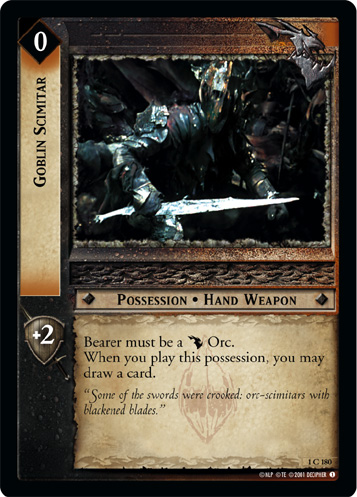 to draw many extra cards on top of that over the course of a game. If one side of your deck cycles well, it benefits the other side, too, because it means you can more quickly find key cards in your deck before they are needed. Cards that draw more cards are not generally called cycle cards, although they do help a deck cycle better.
"Cycling" can also refer to the specific act of removing cards from your hand in order to draw more. This can include cards that discard cards at the same time as drawing them, like Ottar, Man of Laketown (1R80)
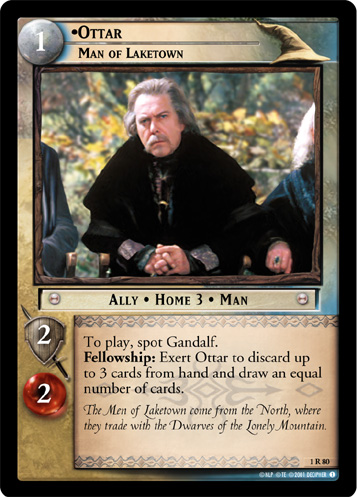 or cards with Muster. Because discarded cards are replaced in each reconcile, this can also mean intentionally discarding cards for a different benefit without immediately replacing them, as with a card like Gwemegil (1R47)
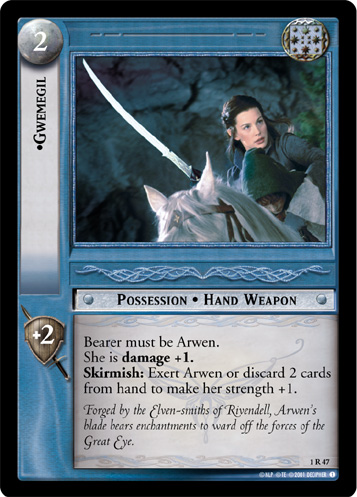 ), or cards like The Shards of Narsil (3R44)
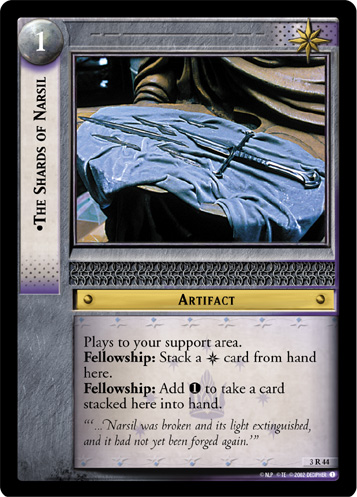 that serve as long-term storage for cards you don't need right now. Card discard can be beneficial in this way, as long as you are only discarding cards you have no current use for, or cards like that benefit you more in the Discard pile than in your hand.
Cycling is the opposite of, and solution to, Hand Clog.
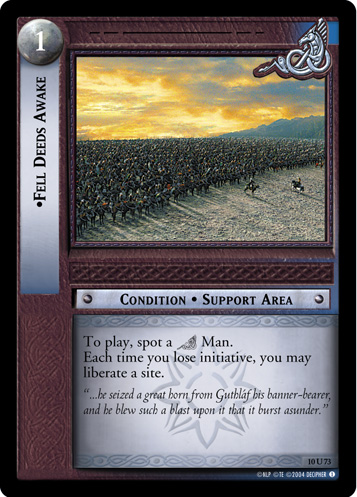
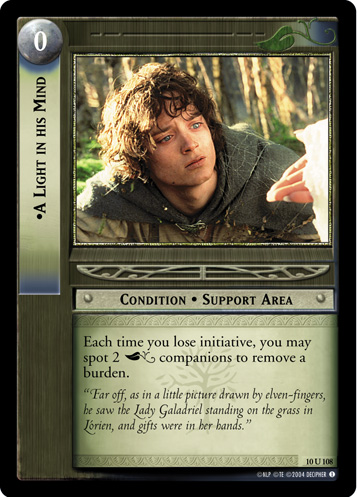
A "cycle" (noun only) can also refer to a series of cards across multiple cultures with thematically-linked mechanical effects. Mount Doom has a cycle of Free Peoples conditions that trigger when the player loses Initiative: Memories of Darkness (10U2)
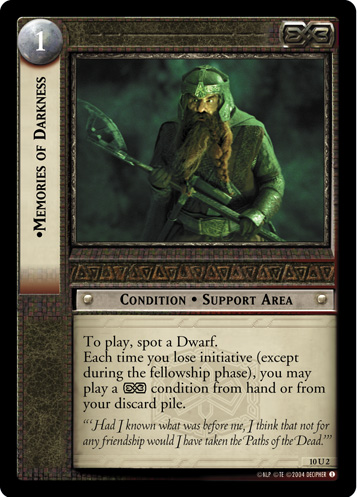 , Glimpse of Fate (10U12)
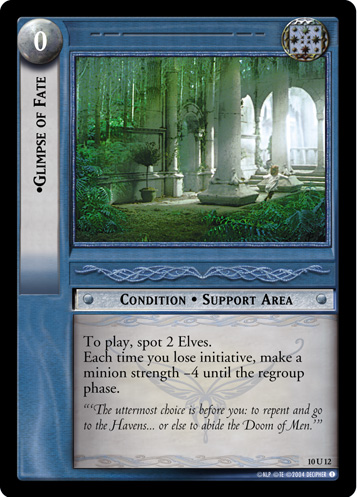 , Brooding on Tomorrow (10U15)
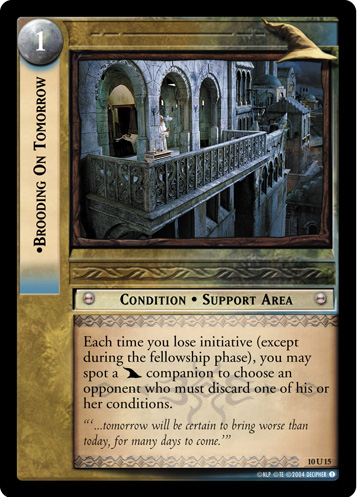 , Hardy Garrison (10U33)
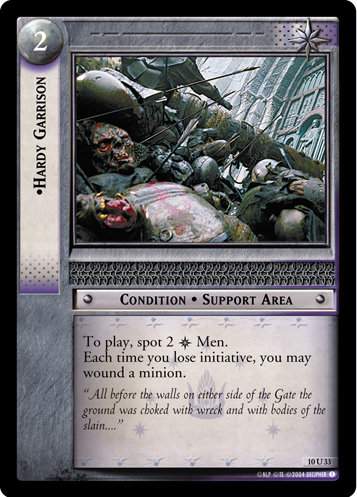 , Fell Deeds Awake (10U73)
 , and A Light in His Mind (10U108)
 . This term comes from Magic: the Gathering, where such cycles are much more common.

